


Are startups just a buzzword? The numbers show a EUR 1.2 billion answer
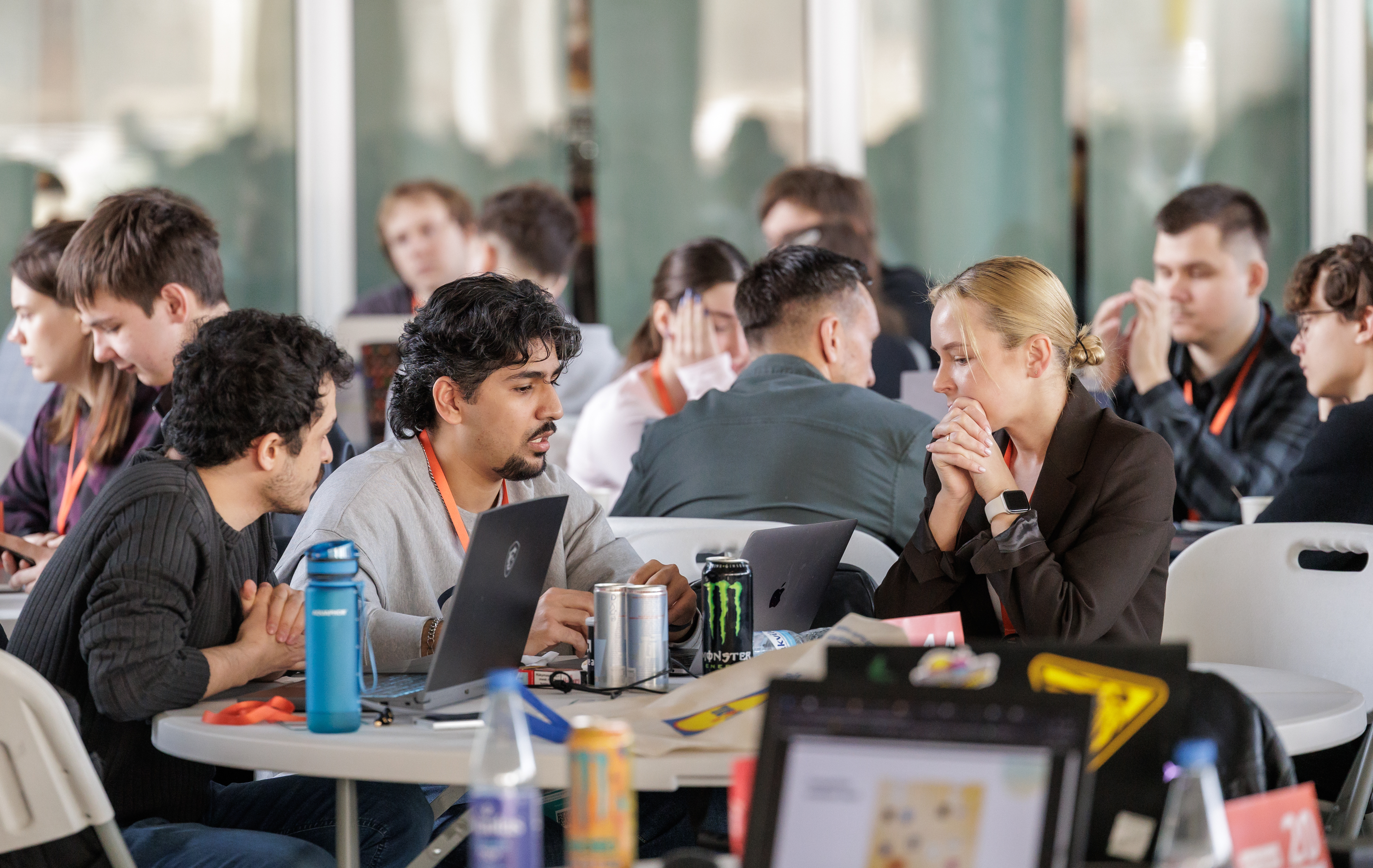
“Startup” is a trendy term frequently heard in the public space, often associated with multimillion investments, high-profile success stories, and unicorns reaching billion-dollar valuations. This is encouraging and inspiring, but do startups create real value for a region and a country? What is their significance in a geopolitical context?
The experts interviewed unanimously state that mature and continuously developing ecosystems of innovative companies, for example in Kaunas, bring significant economic benefits through millions paid in taxes and attracted investments.
And not only that. Innovative, exponentially growing companies create an attractive image for the region and the country, increase internationalisation, introduce new approaches to work culture, and serve as a source of inspiration, experience, and knowledge for new startups.
How to measure the return of startups to a country and how to encourage even faster creation and growth of them – these insights were shared by Vice-Rector for Strategic Partnerships at Kaunas University of Technology (KTU) Edita Gimžauskienė, Director of “Kaunas IN” Tadas Stankevičius, Director of “Tech-Park Kaunas” Paulius Nezabitauskas, and CEO of “NFQ Technologies” Paulius Insoda.
Increasing internationalisation
The head of the agency “Kaunas IN”, which is responsible for Kaunas’ international positioning, attracting foreign direct investment, and promoting tourism, T. Stankevičius, first points to internationalisation. The very concept of a startup defines it as an innovative company with global expansion potential.
As startups grow, they expand into foreign markets and attract the attention of international investors not only to themselves but also to the country and the companies operating within it. This naturally increases the internationalisation of Kaunas and Lithuania. Startups also often hire international talent, contributing to a more open and diverse labour market.
“It is worth noting that startups have a significant impact on shaping work culture in Lithuania. Practices that were once viewed sceptically – flexible work models, non-traditional office solutions, or investments in employee well-being – are now increasingly adopted even by mature corporations,” T. Stankevičius listed the benefits brought by startups.
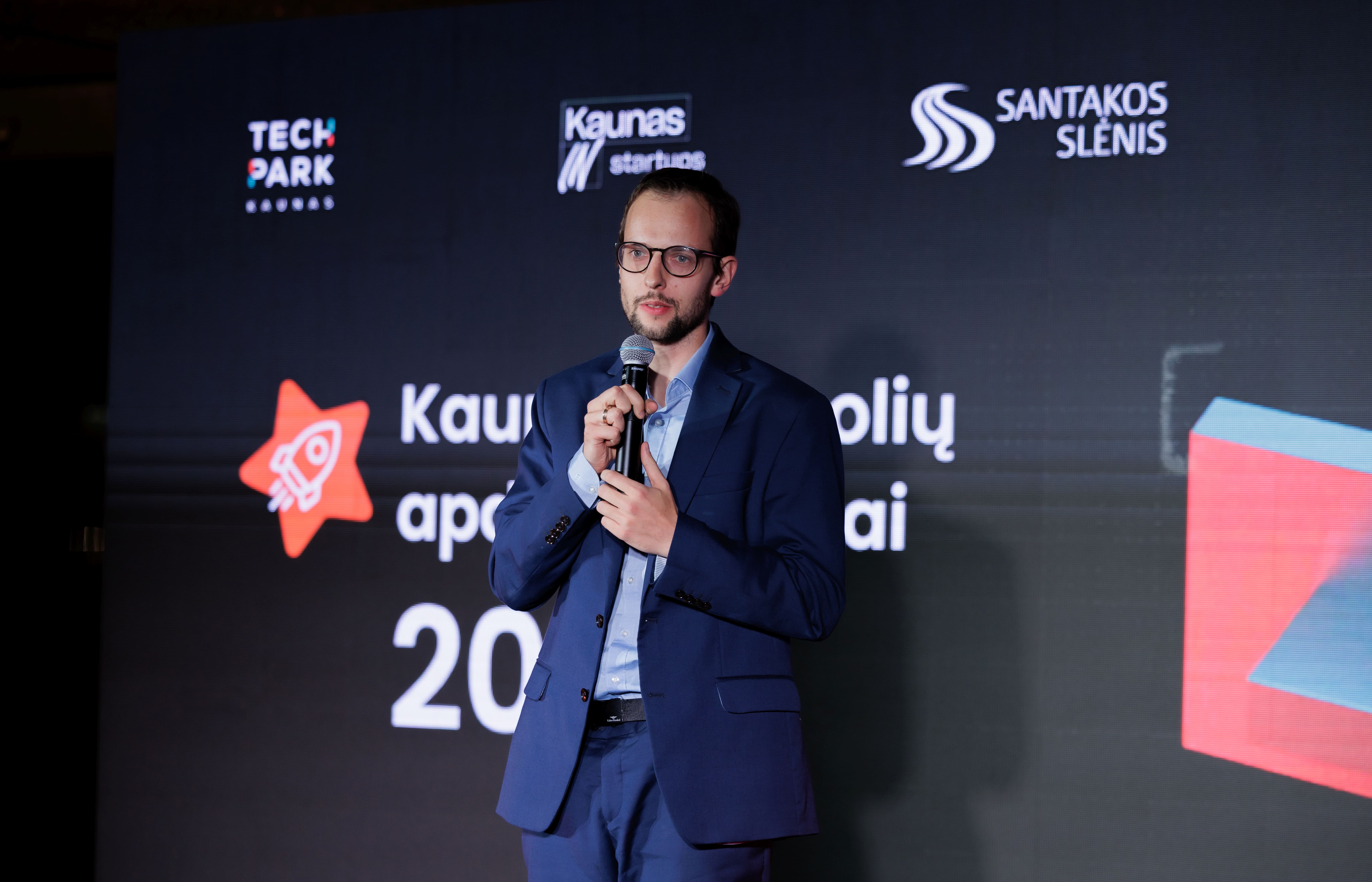
Tadas Stankevičius, Kaunas IN
The most effective response is the ability to act in uncertainty
Director of one of the key parts of the Kaunas innovation ecosystem, the science and technology park “Tech-Park Kaunas”, P. Nezabitauskas, states that the importance of startups and spin-off companies is growing especially in today’s tense geopolitical context.
“Legends of the innovation world, Steve Blank and Eric Ries, define startups not by technology, but by the environment in which they operate. These are organisations created under conditions of extreme uncertainty, constantly searching for a truly working and effective solution that brings real value to people.
Today, these theoretical definitions have become a reflection of our geopolitical reality. The war in Ukraine and the security challenges faced by the Western world show that threats are changing faster than bureaucratic mechanisms and traditional approaches to technology development can respond. This is exactly where the startup mindset and the ability to react rapidly to uncertainty become the most effective tool against evolving threats,” emphasises P. Nezabitauskas.
He illustrates this with a recent example. During the defence technology hackathon “Ugninis skydas”, organised by Tech-Park Kaunas together with the Lithuanian Riflemen’s Union, the team “Luna Robotics”, formed just a few years ago, developed within a few months a technology that is now being tested to neutralise smuggling balloons coming from Belarus.
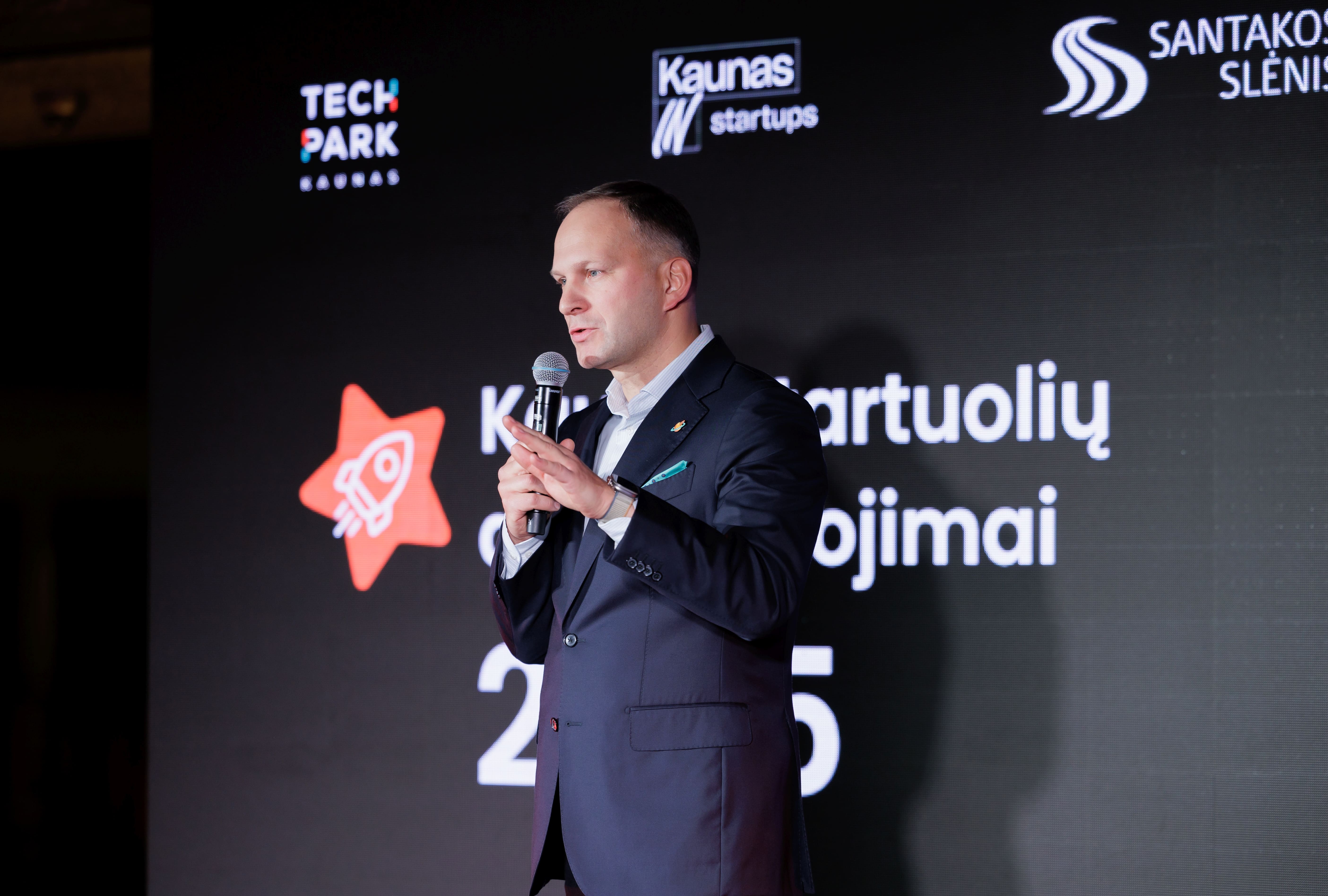
Paulius Nezabitauskas, Tech-Park Kaunas
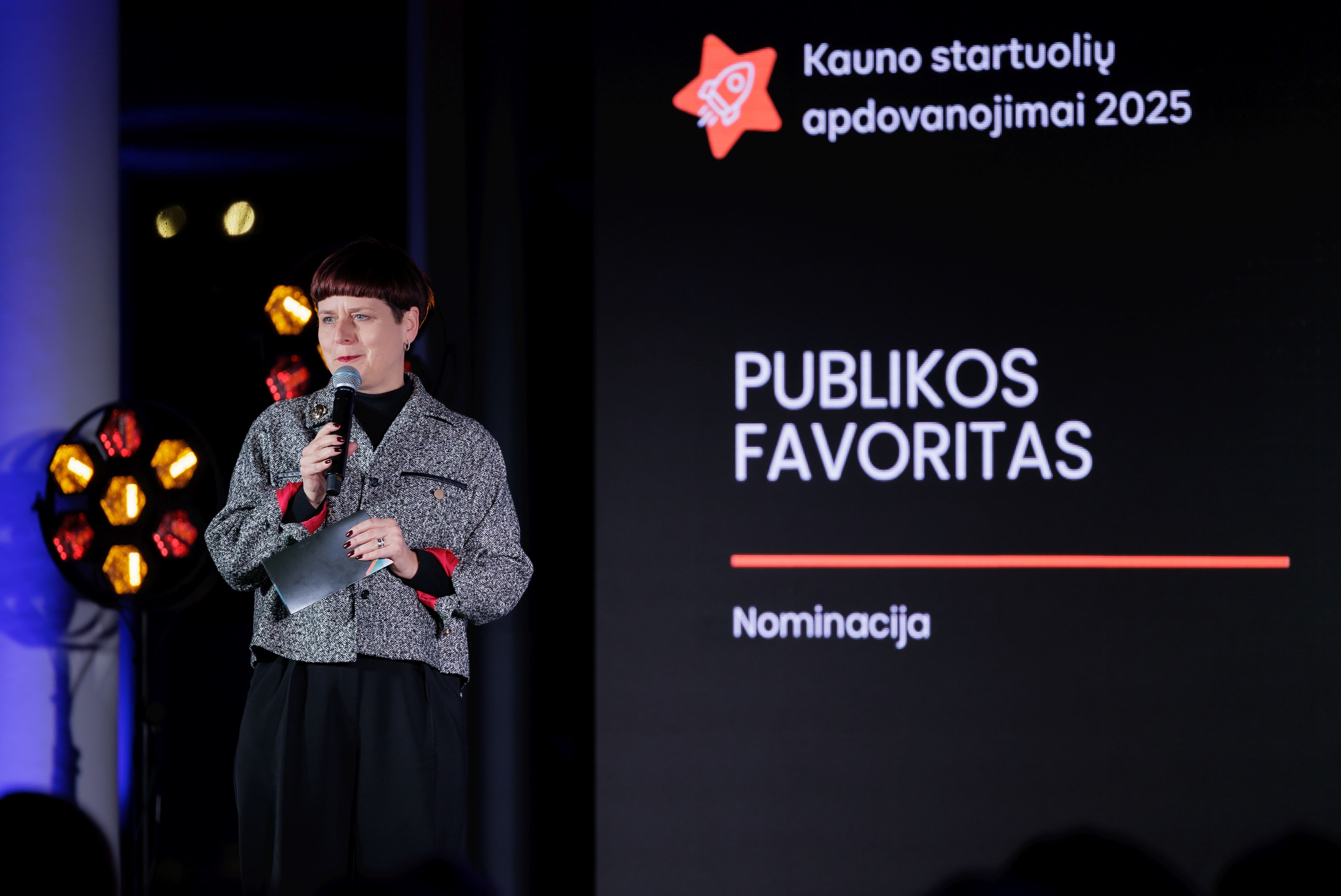
Edita Gimžauskienė, Kaunas University of Technology (KTU)
Strength lies in a functioning innovation ecosystem
Wage figures are equally telling. According to data presented by E. Gimžauskienė, at the beginning of 2025 the average salary in Lithuania’s startup sector reached approximately EUR 4,600 gross per month. For comparison, the average salary in Kaunas city and Kaunas region at that time ranged between approximately EUR 1,900 and EUR 2,000 gross, while the national average stood at around EUR 2,400 gross.
This shows that salaries in the startup sector are on average about twice as high as the city or regional average, although this difference is partly driven by the concentration of highly qualified technology professionals.
“The strength of Kaunas lies in the fact that it is increasingly operating as a unified innovation ecosystem rather than a collection of individual success stories: universities → talent → prototypes and products → startups and spin-offs → export revenue → taxes and reinvestment,” says E. Gimžauskienė.
According to Dealroom data, the value of Kaunas startups reached EUR 1.2 billion in 2025, growing 2.5 times over five years.
Unicorns are not only about image
P. Insoda looked at the value created by young innovative companies from another perspective. With “NFQ Technologies”, he himself has gone through the entire journey, from growing a startup in “Tech-Park Kaunas” to leading one of the most successful Lithuanian international IT companies, whose portfolio includes more than one existing and future unicorn (“Kayak”, “HomeToGo”, “Alaiko”).
According to him, successful startups and unicorns are not just a source of national pride or proof that “we can do it”. Their real value is revealed through the transfer of knowledge and experience. They are vital participants in the ecosystem, people who have already gone through fire and water – “ex-Vinted”, “ex-Tesonet” or “ex-Google” employees – who have a catalytic effect and help prepare newcomers for future success stories.
“These are people who have seen with their own eyes how value is created, how expansion into global markets happens, and what truly matters to investors. When you have a forge of ideas where innovation is generated, and you connect it with people who know how to turn those ideas into reality, processes start moving at a completely different speed,” the expert explains.
This experience also becomes a critical factor in attracting venture capital. Investors constantly assess risks: one is technological, the other managerial. While technological risk can be mitigated with the help of experts or science parks, business success often depends on the maturity of the team.
“If the team includes seasoned founders who have already had a successful exit or have delivered projects from A to Z, this serves as a strong signal of reliability for investors. With such a team, the probability of success increases significantly, as they are no longer doing everything for the first time,” says the CEO of “NFQ Technologies”.
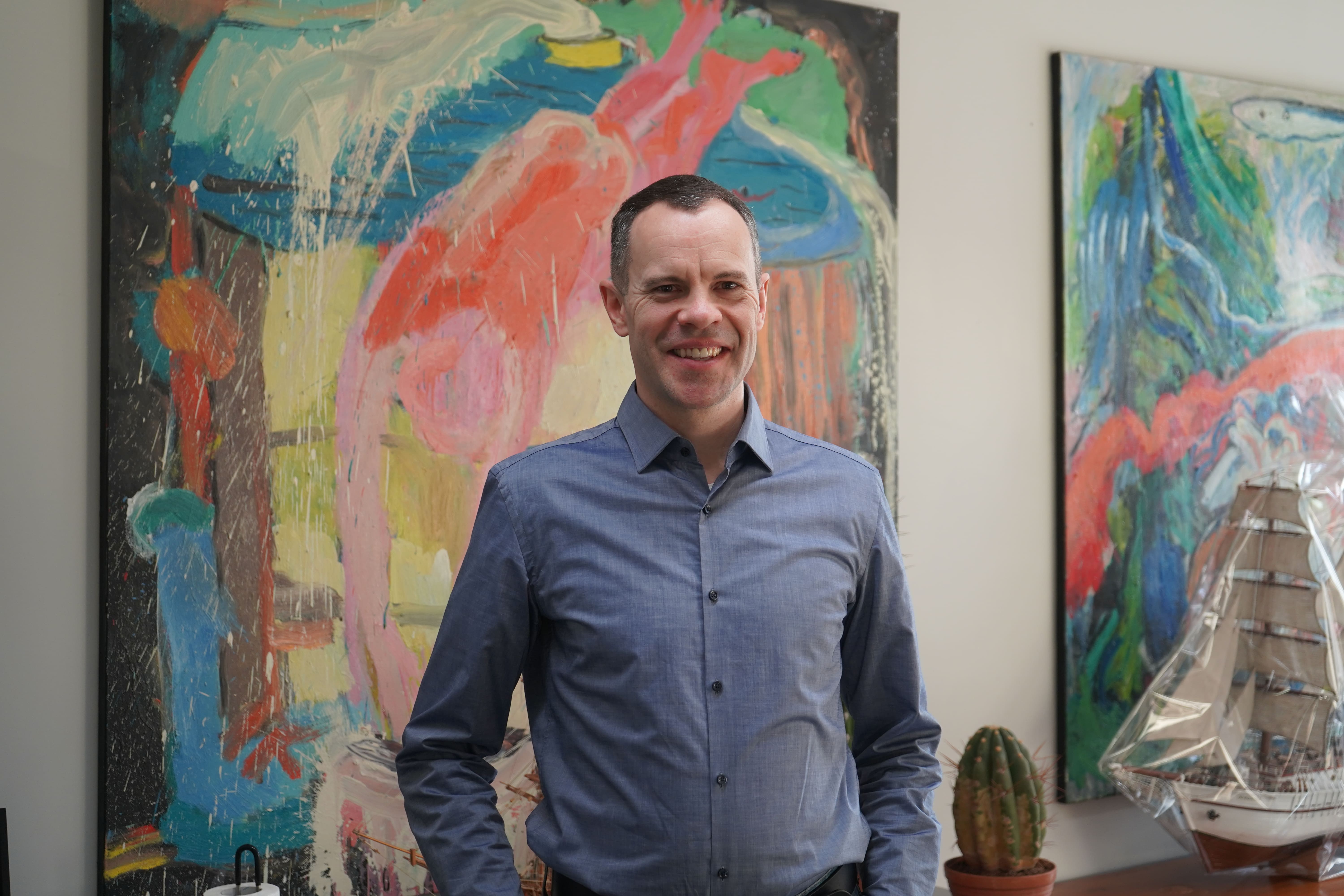
Paulius Insoda, NFQ Technologies
Challenge – accelerating company maturity
P. Insoda believes that the state and government should focus not only on reducing regulatory burden, but also on actively improving the environment by creating tools that make the country more attractive for investment and encourage the emergence of new innovative businesses.
P. Nezabitauskas concludes that the main challenge for the innovation ecosystem in Kaunas and the entire country is to accelerate the maturity of innovative companies and expand their businesses into foreign markets. Currently, many programmes are focused on early-stage startups, but economic growth requires scaling and strengthening more mature companies.
“There is a need for targeted programmes, dedicated infrastructure to increase smart manufacturing, and agreements on how to more rapidly develop the specialists that are in short supply in the most promising and high-potential technology sectors – defence and dual-use, medical, financial, artificial intelligence, and biotechnology,” says the Director of “Tech-Park Kaunas”, P. Nezabitauskas.
By aligning the efforts of business, science, and government, and by consistently continuing the work started decades ago, in the coming years we may see not only EUR 1.2 billion, but a multiple increase in the value of the Kaunas innovation ecosystem.