



The wave of AI has not bypassed Kaunas – technologies are being developed faster than ever.
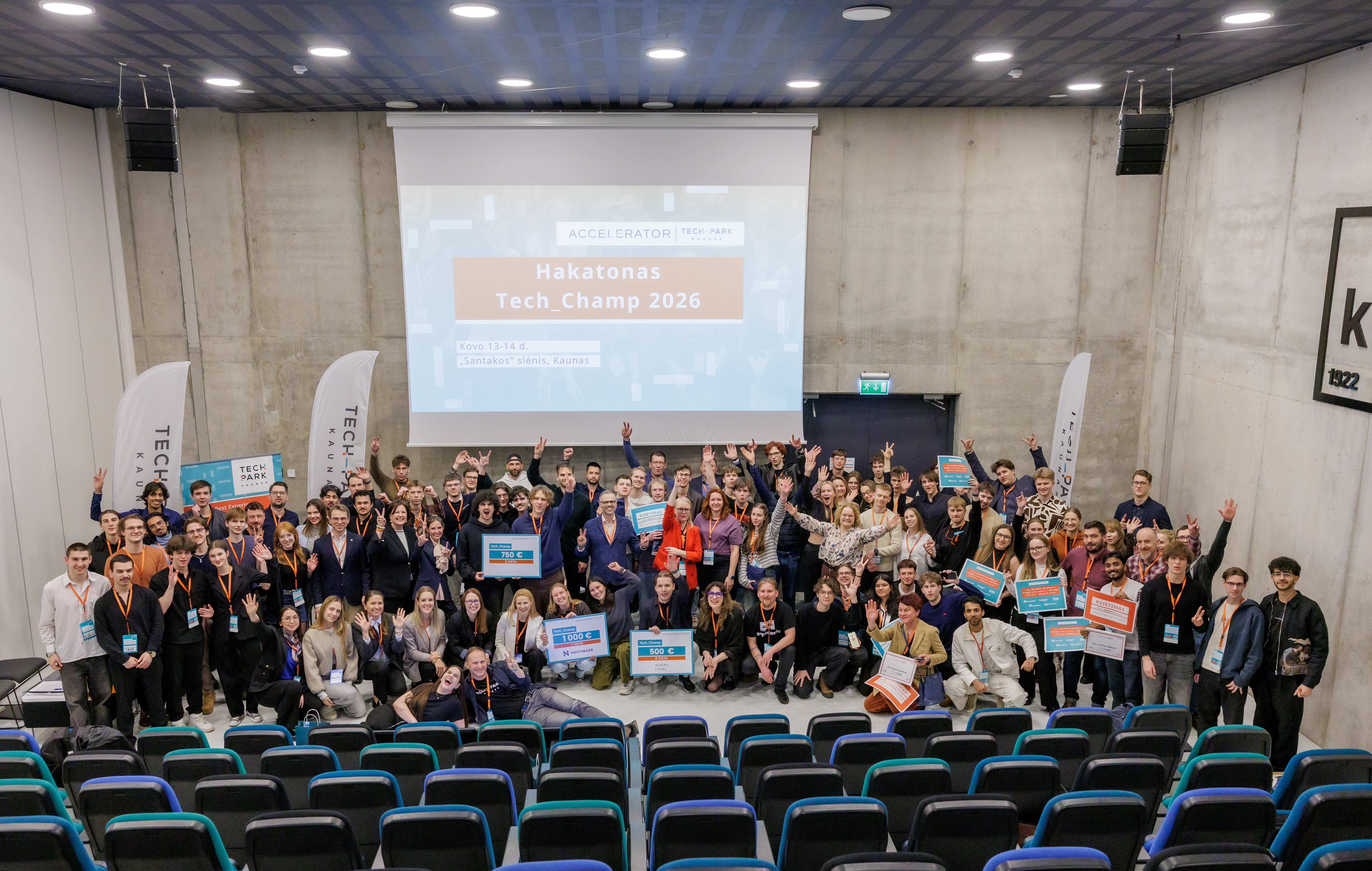
For several days, Kaunas became a meeting point for more than 150 innovators from the fields of healthcare, information technology, and artificial intelligence. But events like this are more than just an intense weekend – they are part of a broader, ongoing process. For several years now, Tech-Park Kaunas, together with its partners, has been consistently applying the hackathon format, complemented by technology acceleration programs. This model contributes to the creation of more than 20 new businesses each year.
Held in Kaunas, Tech_Champ 2026 brought teams together to tackle real-world technological challenges set by companies and to develop their own ideas within just 48 hours. In this ecosystem, the hackathon serves as a starting point – a space where solutions are tested in real conditions. Their further development continues beyond the event itself, but this is where the initial momentum is created.
This is also reflected in examples from previous years. After participating in the hackathon, the BrainPredict team went on to establish a company and continues to develop an AI-powered solution based on medical imaging to assess the risk of brain diseases. This year, the team returned with a new product.
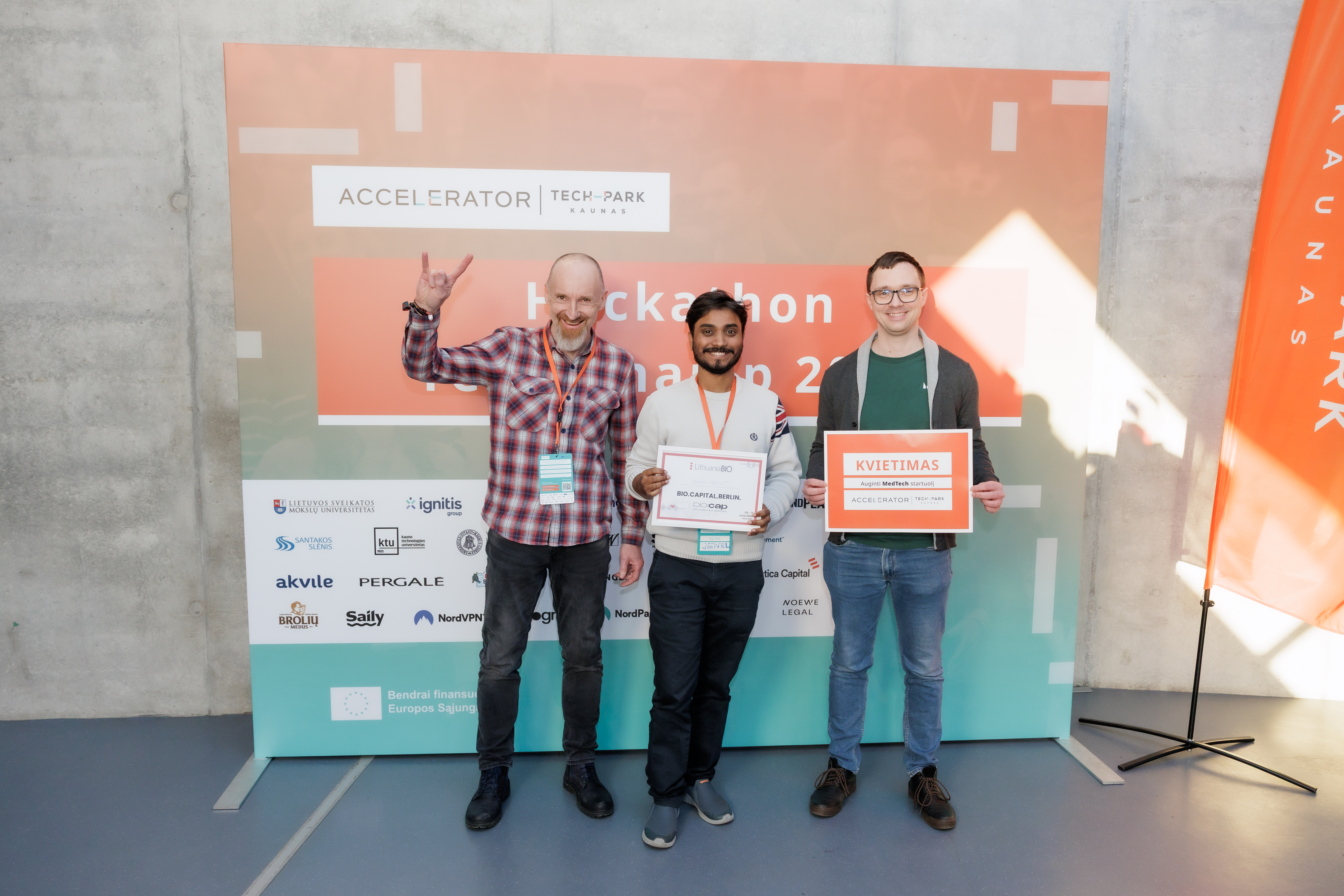
BrainPredict
Artificial Intelligence: no longer an advantage, but the starting line
A few years ago, artificial intelligence at hackathons was still seen as a distinct competitive edge. Today, it has become a baseline tool.
“AI is already all around us – in our phones, computers, and servers,” says hackathon guest and mentor Apostolos Tsetoglou.
However, the real shift lies not in the availability of technology, but in the ability to apply it effectively. This was evident in the teams’ work – AI was no longer an add-on feature, but the foundation of their solutions.
Access to technology today is unprecedented, which means that competitive advantage is shifting from the technology itself to how it is used. As health tech expert Tadas Narutavičius emphasizes, “People remain the most important link.”
This shows that the rise of AI is transforming not only the tools, but the entire creation process. Solutions are increasingly built on clearly identified problems and the ability to test them quickly.
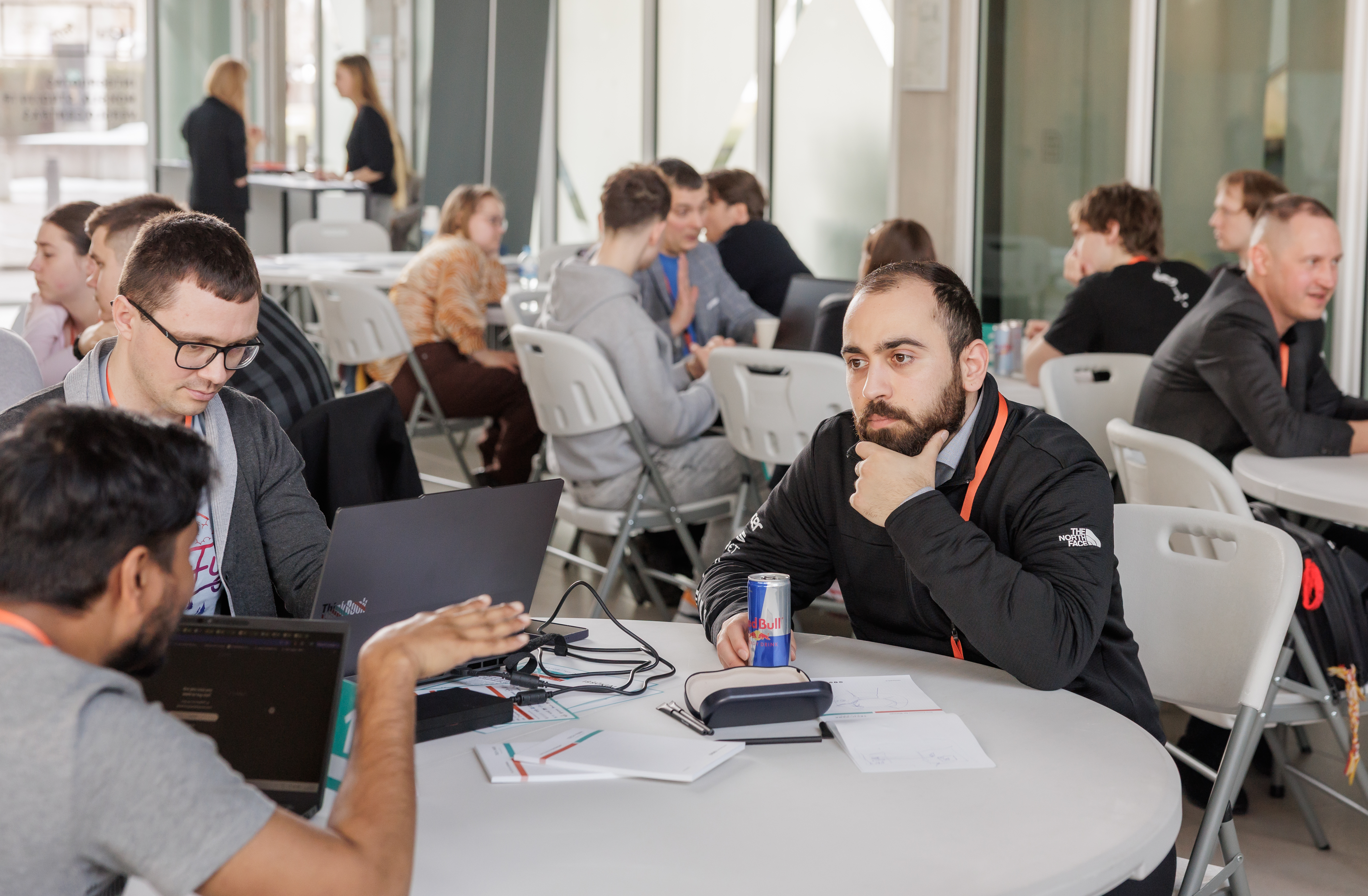
Apostolos Tsetoglou
Health Tech: women’s health moves from the margins to the center of innovation
The first-place winning team, Ovulink, reflects the growing momentum in women’s health technologies. Their solution – a cervical biosensor – enables real-time monitoring of hormonal changes and more accurate identification of fertile days.
Until now, most fertility tracking methods have relied on indirect indicators, often resulting in delayed or inaccurate insights. The team’s approach shifts toward continuous biomarker monitoring and data-driven evaluation.
“We knew exactly what we were building, because we are women ourselves and deeply understand these challenges – we hear about them in our own environments too,” say the team members. This highlights a broader trend: solutions are increasingly developed where problems are understood from within, with technology serving as a tool to precisely measure and address them.
The team has also clearly outlined its next steps – working with mentors and further developing the product alongside business and engineering experts.
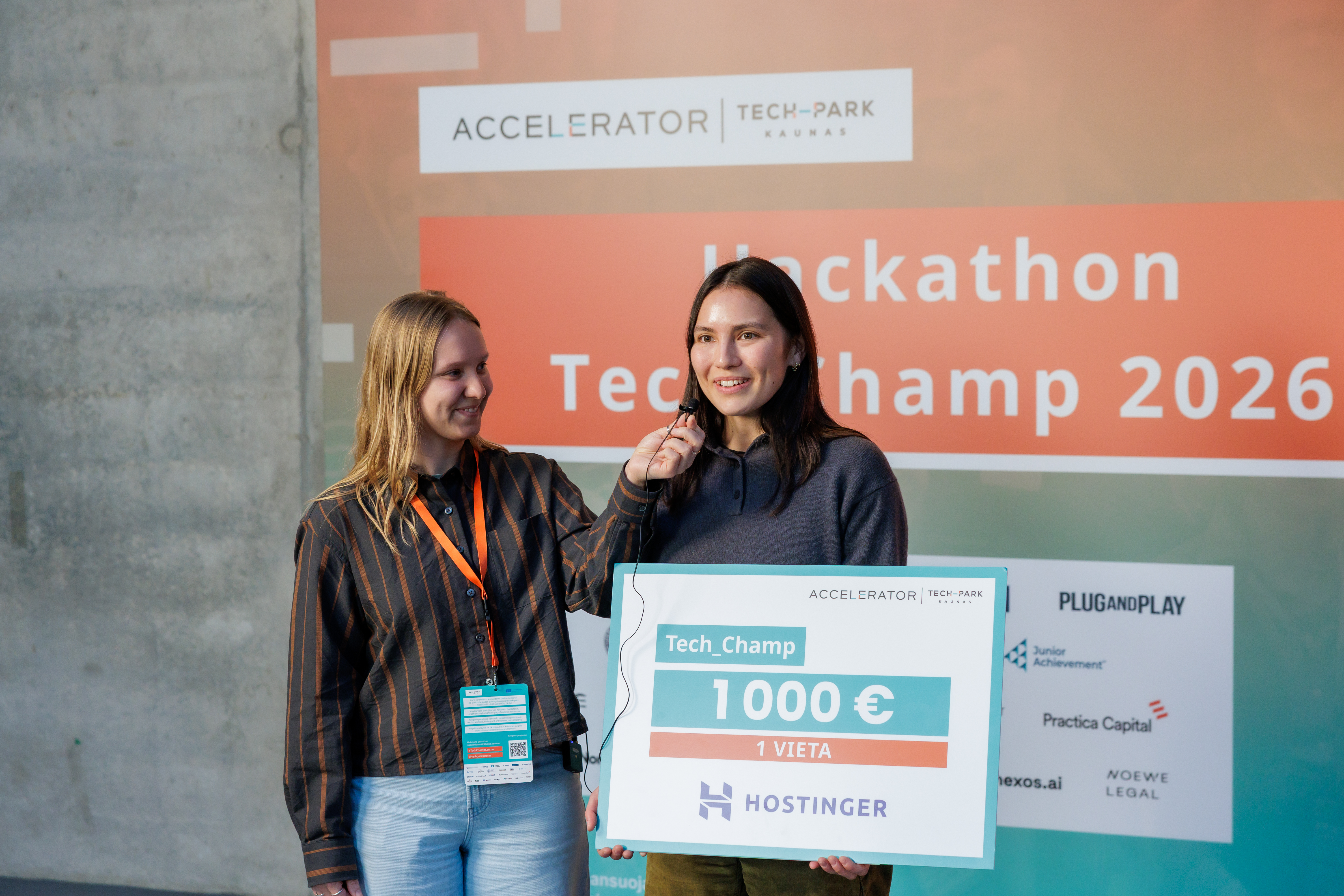
"Ovulink"
Energy: from consumption monitoring to decision-making
The second-place team, Extended, tackled an everyday yet often overlooked challenge – how to truly understand real energy consumption. Their solution is a smart power strip that analyzes data in real time and identifies connected devices.
“At first, we didn’t have any data… so we thought – why not build our own device and generate the data ourselves,” the team explained.
This reflects a broader shift: having access to data is no longer enough – the real value lies in the ability to generate and interpret it. This is especially critical in areas where decisions must be made in real time, such as when to consume energy, how to reduce costs, and how to avoid peak loads.
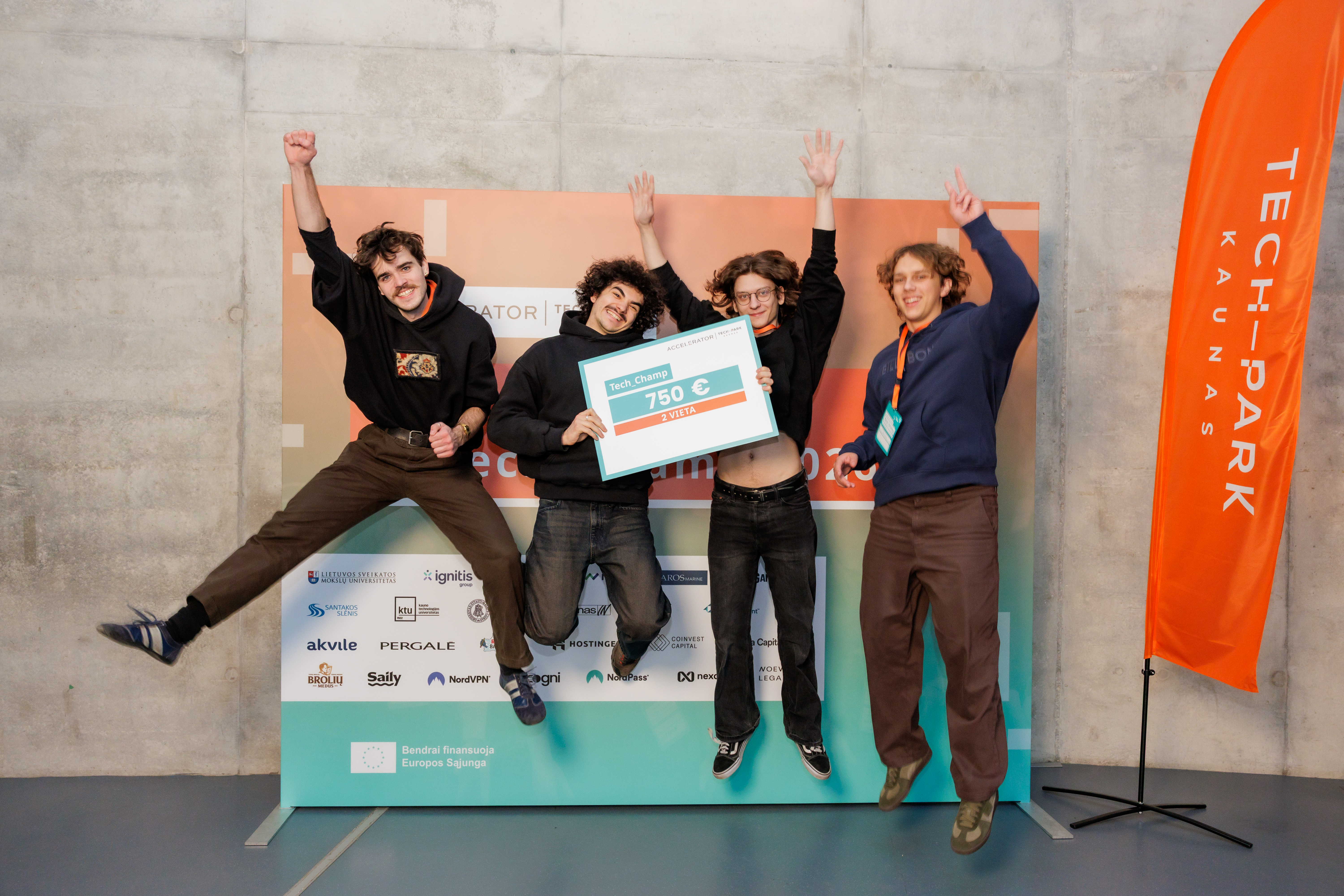
"Extended"
Veterinary care: an overlooked market with high potential
The third-place team, Noksta, focused on the veterinary sector – a space where data is fragmented, systems are not integrated, and administrative burden remains high. Their solution aims to connect clinics and pet owners into a unified system covering appointment management, treatment history, and data analytics.
In such an environment, digital solutions are no longer a value-add but essential infrastructure. This highlights a broader insight: the greatest innovation potential today lies not where technology is most advanced, but where it has yet to be systematically applied.
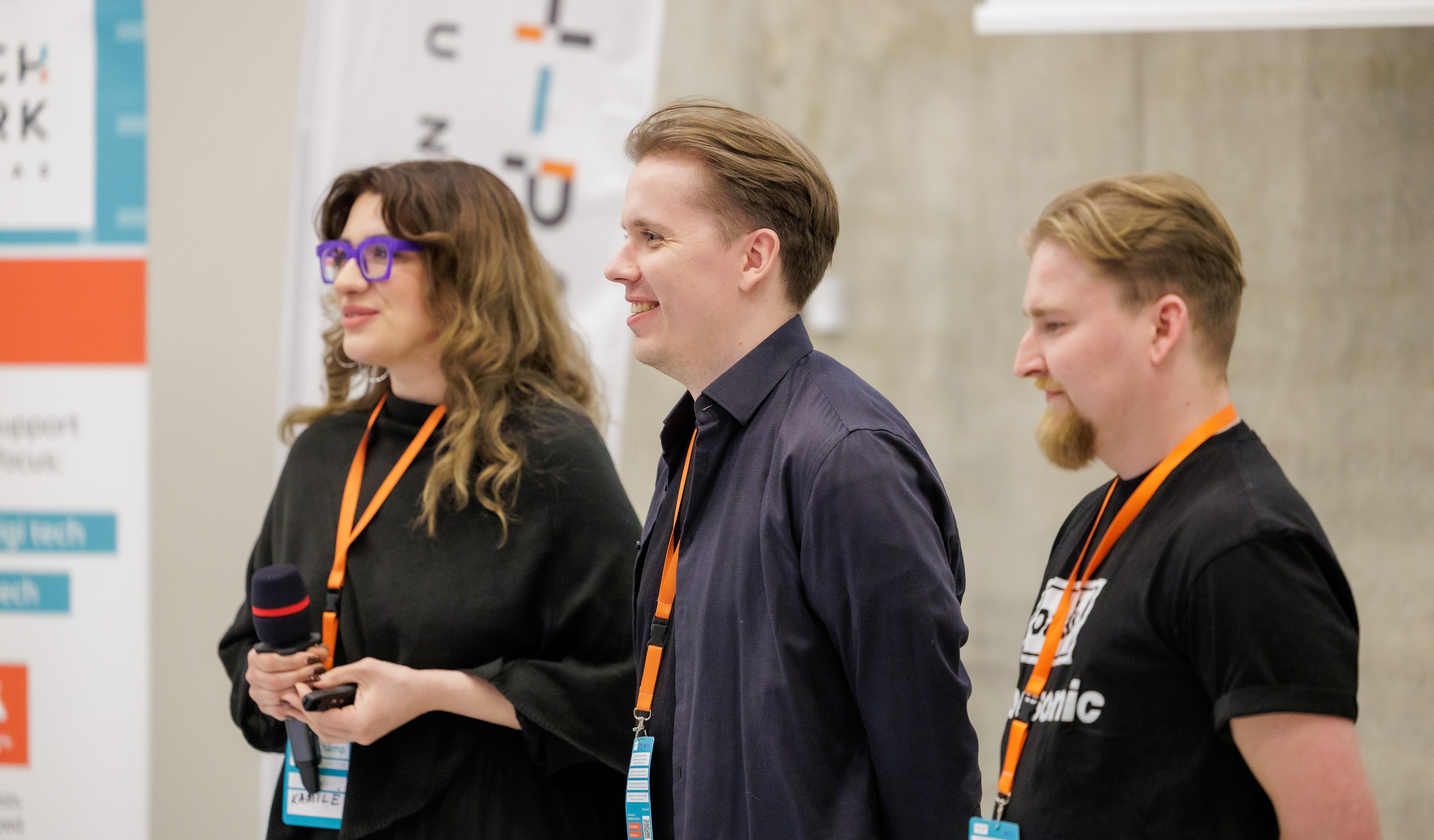
"Noksta"
The biggest blind spot: the business model
Despite the level of technological sophistication, most teams face the same challenge – how to turn a solution into a viable business.
“They know the solution, but don’t always understand their problem,” says mentor Viktorija Janilionytė. According to her, teams are often able to define a technical solution or even present a data-backed description of the problem, but fail to answer the fundamental questions: who needs this solution, what value it creates, and how that value will be monetized.
This gap is especially evident at the early stage, when solutions are built on assumptions rather than real user needs. While the barriers to building technology are decreasing, the ability to develop a sustainable business model remains one of the most challenging steps.
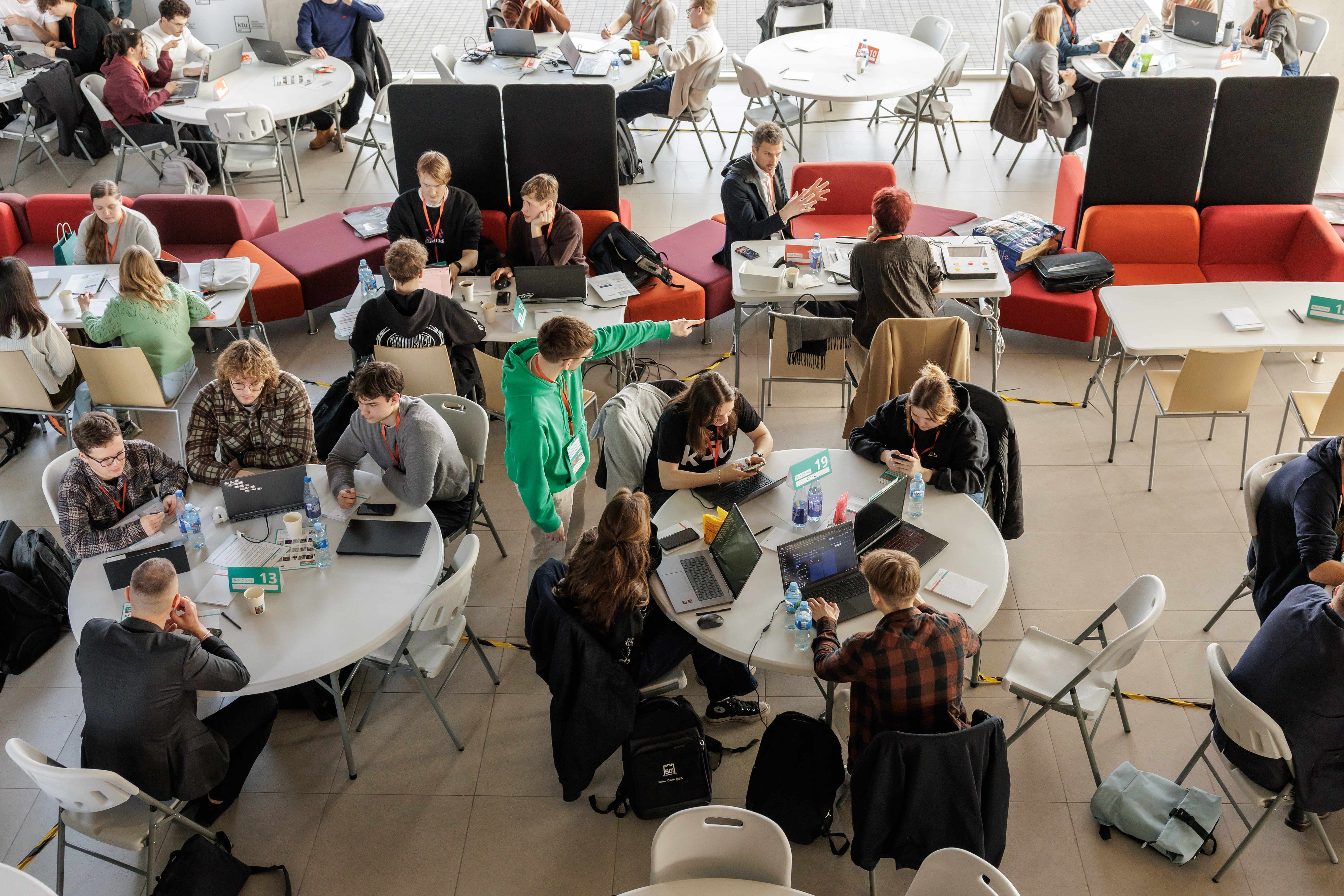
Tech_Champ 2026
What truly connects startups and the Dakar Rally
“No one has ever succeeded without trying,” says event guest Vaidotas Žala. “The road won’t be smooth – it will be full of ups and downs.”
This idea captures the reality of building startups in a very simple way. It is especially visible in a hackathon setting – teams don’t have all the answers, often don’t even know if their solution will work, yet they still have to move forward, test, and make decisions in a very short time.
In essence, this is no different from real business – decisions often have to be made without having all the information. In the end, it’s not those who know everything who succeed, but those who are able to act.
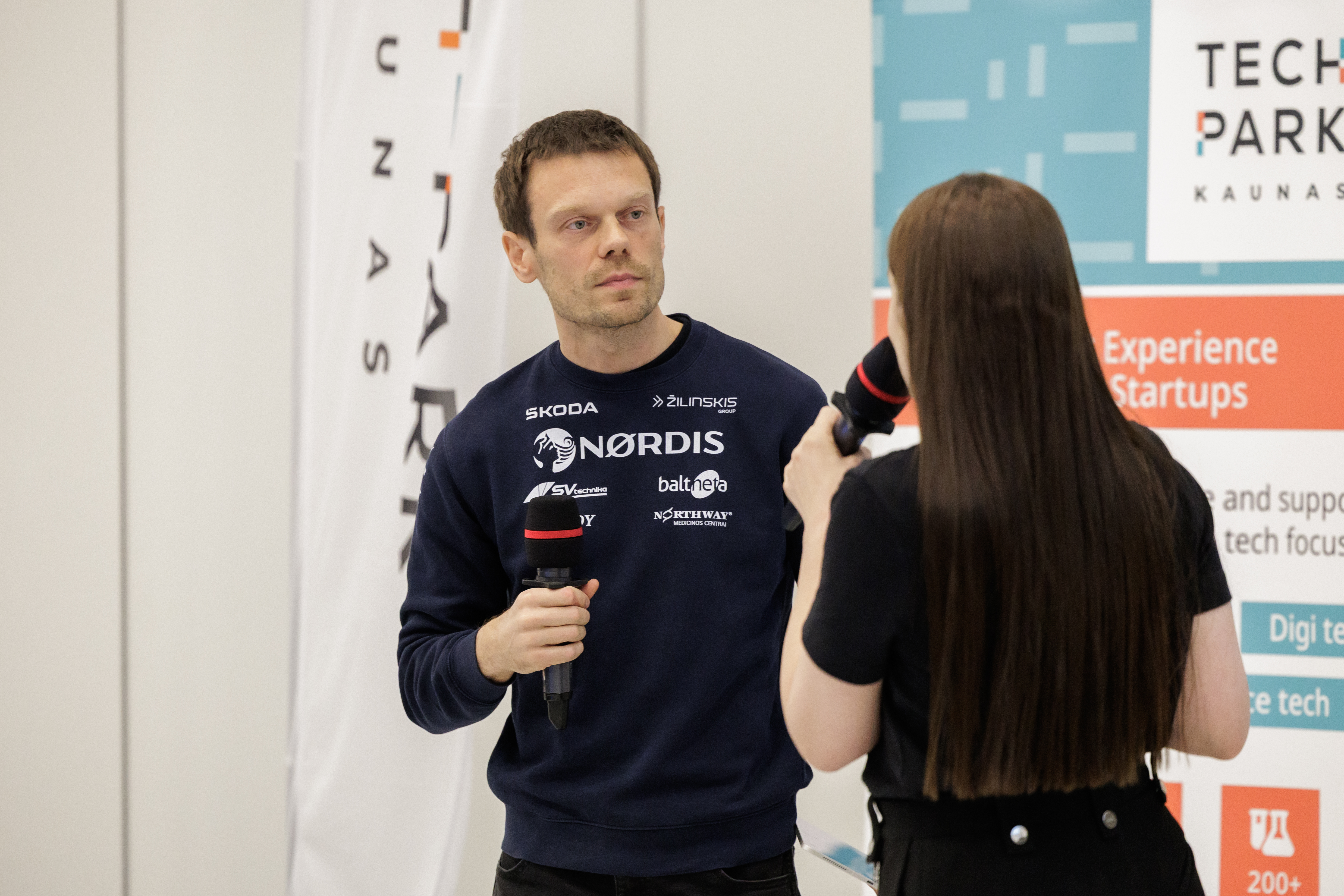
Vaidotas Žala
From idea to product: what happens after the hackathon
Ideas born during hackathons are increasingly moving beyond the prototype stage and becoming real products. For example, the Komseteka team is developing a physiotherapy patch for wrinkle prevention, while the AngioRepair team – formed by researchers from LSMU and KTU – is building solutions for diabetes care, focused on early complication prevention and improved patient monitoring.
These examples show that a hackathon is no longer just a space for testing ideas, but a real starting point for solutions that continue to evolve in the market.
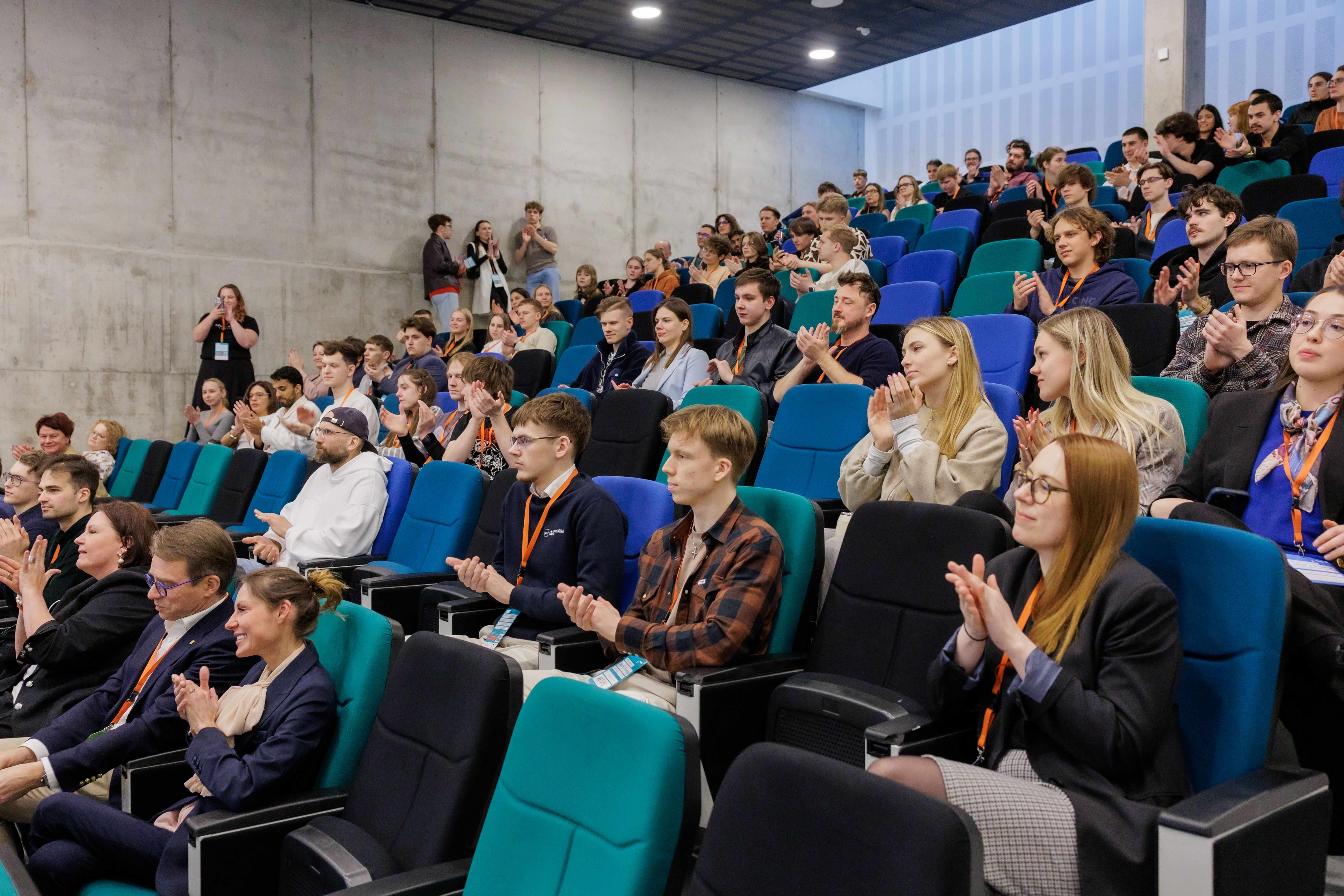
Tech_Champ 2026
Why events like this matter for the city
“Kaunas is gradually becoming one of the cities driving deep tech development,” says Paulius Nezabitauskas, CEO of Tech-Park Kaunas.
As an academic city, Kaunas has all the prerequisites for this direction – several universities operate here, with more than 42,000 students enrolled each year. The key challenge is to connect their motivation, knowledge, and practical skills with business experience and mentorship.
In events like hackathons, this potential begins to take shape. Within a short period of time, teams not only develop ideas but also test their real-world applicability, while further development is supported through dedicated programs such as accelerators.
“Those who build strong solutions typically focus and bring their prototypes to life within around 12 months.”
This shows that a hackathon functions as part of a continuous growth process – a space where teams are formed, ideas are tested, and the journey from concept to market begins.
According to P. Nezabitauskas, in this process, it’s not just about technology, but about people: “Experience is your investment – one that no one can take away from you.”
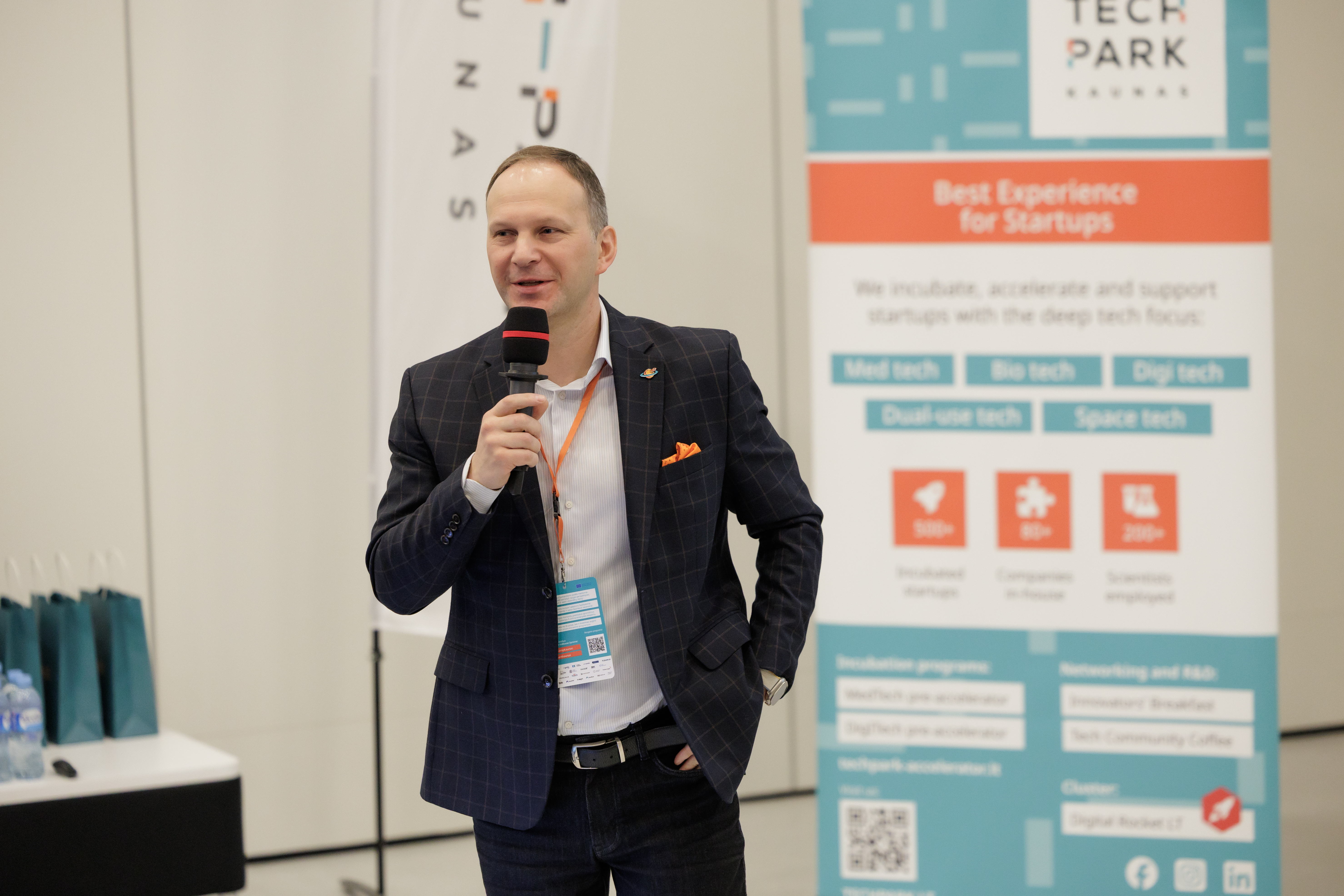
Paulius Nezabitauskas